 If you were not aware – this Sunday commemorates a special day on the Jewish Calendar known as Purim! In a world of blizzards, earthquakes, and Tsunami’ s, it’ s always good to reflect on God’s promises and protection of his people. This year, March 20-21, 2011, Jews around the world will celebrate two days of joyful activities and reminders of God’s faithfulness in preserving their people. For several reasons all disciples, Jewish and Gentile, would do well to recognize and celebrate this popular Jewish holiday.
For several reasons all disciples, Jewish and Gentile, would do well to recognize and celebrate this popular Jewish holiday.
 ot only educational and fun, but quite evangelistic as well! Recognizing the meaning and participating in such celebrations conveys a spirit of support and appreciation of the Jewish people.
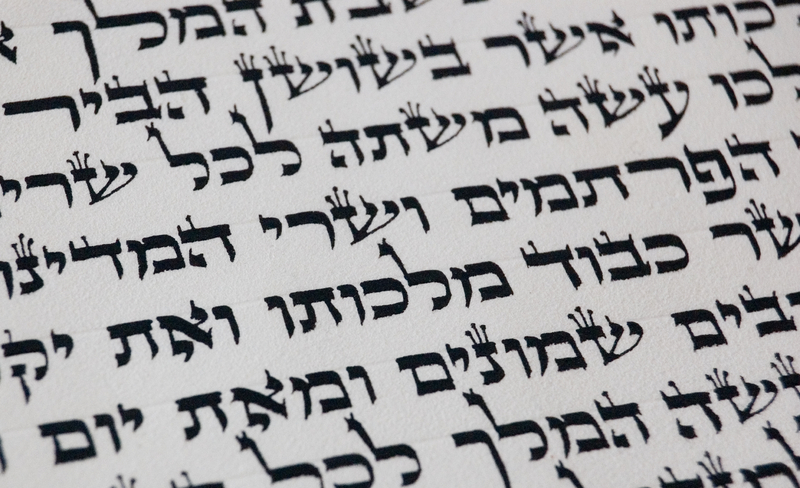
Purim is a “cool” holiday and not just because it occurs during late winter! Like Passover and Hanukkah, this holiday involves the retelling of a series of historical events surrounding oppression that resulted in liberation due to the courage and faith of particular individuals. Purim is found in the Hebrew Bible in the scroll titled Megillah, we commonly know as the Book of Esther. There we are taken on a journey back to the Persian Empire and observe the hand of God working behind the scenes to preserve his people while exiled in a foreign land. The book of Esther contains a story full of intrigue, irony,surprises, suspense, humor, and several amazing events of “coincidence”. The book opens with a beauty contest and ends with a massacre. It contains the tale of the beautiful Jewish maiden Esther, who wins the favor of the Persian 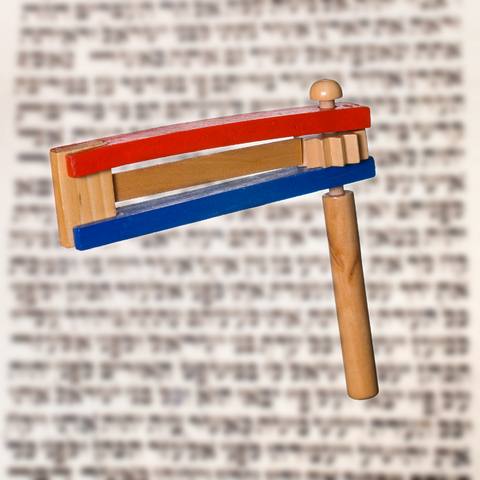 King Ahasuerus (possibly Xerxes) and becomes his queen. The story also revolves around an intense hatred for Esther’s cousin, Mordecai, by an evil royal official named Haman. Haman persuades the King that the Jews are a seditious people and should be annihilated. A lot (pur) is cast and the date of destruction is determined as the thirteenth day of the month of Adar (equivalent to our March).
The Upside Down Holiday
God’s Presence behind the scenes
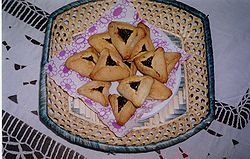
 On Purim, after reading the story of Esther, the traditional Jewish customs for this holiday include enjoying a great feast, dressing up with colorful costumes to reenact the story, eating traditional cookies called *Hamentashen, and drowning out any mention of the name of “Haman” whenever he is mentioned.
Beneath all of the festivities there is a serious undertone: Purim, more than any other Jewish holiday, characterizes the concern of the Jews about their status as a minority people. It is also their one formal occasion to laugh at their institutions and history while expressing fear of physical danger. Purim is the only Jewish holiday that deals specifically with the phenomenon of anti-Semitism (other holidays such as Passover and Hanukkah deal with oppression in a more general sense but not with ethnic hostility). Recent history in Europe and the Near East suggest that the religious persecution commemorated by the Feast of Purim still lives, side by side with the holiday.
We must never lose sight that Jews are the men and women whose courage and determination made it possible to withstand ongoing oppressions, survive as a people against all odds, and ultimately made it possible to bring our Messiah into the world. Consequently, His coming provides the greatest of deliverances and consequently the greatest of joys. This essay has attempted to highlight several distinguishing characteristics about Purim and its relevancy for all believers.
For today, do yourself a favor and read the book of Esther and relish in observing God’ s amazing work behind the scenes. Most importantly, rejoice with your Jewish friends that this event happened. Find yourself a Jewish synagogue to visit and enjoy an entertaining and educational Purim play that recounts the events that began as a catastrophic crisis and ended as an amazing turn of events, over throw of evil, freedom and prosperity for those who were originally targeted to die. It will be good for your faith, your children’ s faith and lead you to express heartfelt praise and worship to Hashem. our Lord. Tell your kids about it, rejoice and be glad today that you are alive and please pass the Hamentaschen* .
Happy Purim, — Phillip Lester
* Hamentaschen* is a three cornered cookie filled with jelly, a traditional pastry often associated with Purim. The triangular shape is patterned after the three cornered hat of Haman (the villain) of Purim.