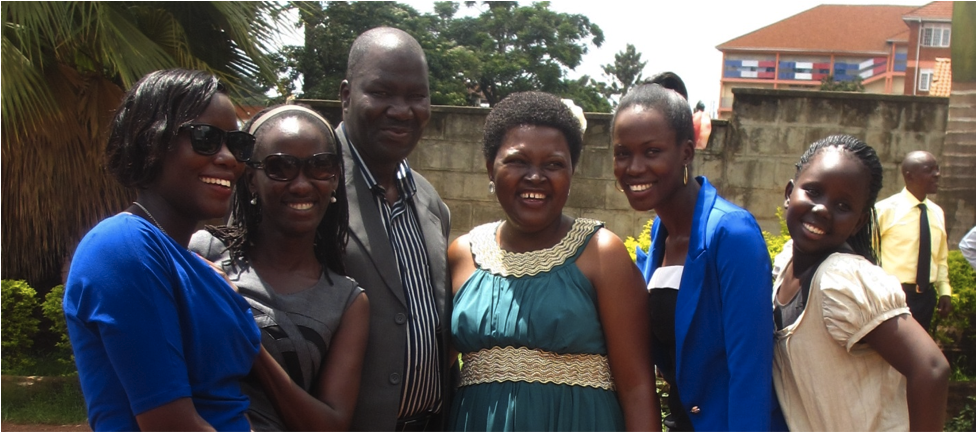
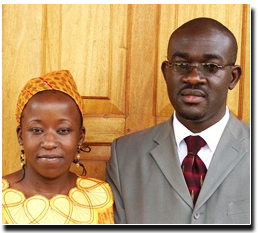
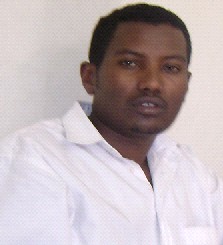
 My name is Berhanu Bedada Wari. I am 29 years old. I currently lead the church in Addis Ababa, Ethiopia by the grace of God …The church in Addis Ababa was originally planted in 1991 by two brothers who had gone to Kenya as refugees and became disciples in Nairobi … Currently, we are fourteen disciples in the church …
My name is Berhanu Bedada Wari. I am 29 years old. I currently lead the church in Addis Ababa, Ethiopia.
The church in Addis Ababa was originally planted in 1991 by two brothers who had gone to Kenya as refugees then and became disciples in Nairobi. Their names are Tewolde Gebremeskel and Mulugeta Taddese. Tewolde has now moved back to Nairobi where he was first converted. Mulugeta is also now in Dire Dawa, about 550 km away from Addis.
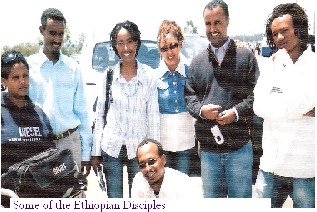
Currently, we are fourteen disciples in the church out of which four are foreign disciples and members of their families working with UN and AU. The rest ten of us are Ethiopians. There are three married people in the church and the others are still singles and single parents.
The oldest disciple with us now is called Solomon Abera. He became a disciple fifteen years ago, a year or two after the church was first planted. He is now married to Elizabeth and has a baby boy called Leul. Solomon is a faithful brother.
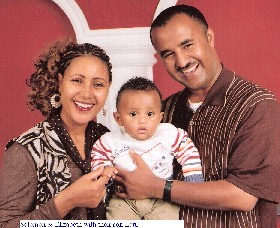
Solomon & Elizabeth with their Son Leul
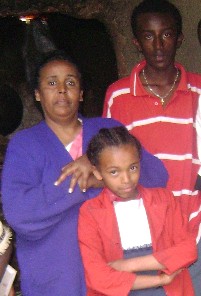 The oldest disciple physically is called Tsehai Assefa (pictured at right with some of her grandchildren). She is single mom of age 56. She is an inspiration to all of us including disciples who visit the church in Addis from other sister churches. She has overcome a lot — becoming a social outcast when she decided to be a disciple a couple of years ago.
Moreover, she leads a family of eight. Five of the kids are her grandchildren. Four of them are orphaned by HIV/AIDS. She doesn’t have a job but only relies on renting some of her rooms and a little pension from her late husband. But in the face of all these challenges, she doesn’t complain and instead believes in God deeply and hopes in Him.
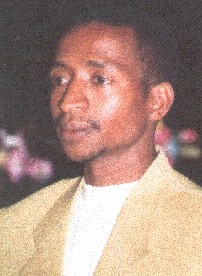 We have witnessed great sacrifices paid for the church over the years. The outstanding and unforgettable one was that of Daniel Kuria Njogu (pictured right). He was a Kenyan who led the church in Addis with an Ethiopian sister called Hannah Woldeyes from January to mid April 2001. He was killed by Ethiopian police who were shooting randomly trying to control the students’ riot in Addis on April 18, 2001. He had gone to the area where he died to visit a sister who was sick and unknowingly found himself in the middle of terrible uprising.
I first met Daniel on March 10, 2001, the day he reached out to me when I was still a campus student. He studied the Bible with me and baptized me into Christ two weeks later. He was so committed to helping me.
Daniel was a great disciple of Jesus. I learned a lot from him in the five weeks I knew him. He was also a humble leader of the church. He lost his life on earth but joined Jesus in heaven. I felt like he died for me. His sacrifice inspires me and many others who ever heard about him all the time. I always feel that I have been redeemed by the blood of Jesus by faith and by the blood of my brother Dan by sight. We all consider him as a hero till now and we are forever grateful for his sacrifice.
Since then, there have been so many challenges, but God in his goodness and mercy has helped me and a few others remain faithful. And today, by the grace of God, I lead the church.
Many people became disciples in Ethiopia. I remember one time we got to thirty eight. But over the years, many people wandered away including some leaders, especially after 2003 — not because of what happened internationally to the church (many people didn’t have access to the internet and many didn’t know how to use it as well), but because there was a lot of spiritual immaturity in the church. They were defeated by the schemes of the devil. Even now the church is quite weak. The guys who were at the frontline went or wandered away and it is taking long for the “backbenchers” to come forward and take responsibilities of leadership.
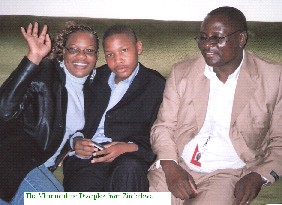
The Vhurumukus from Zimbabwe
We do reach out to people on the streets but it is not as effective as building friendships. Because of a lack of trust, many people are more interested in whether one belongs to their group or not than what they are told, no matter how right it is.
Ethiopia is a country of much closed culture. The Ethiopian Orthodox Union church, an autonomous traditional “Christian” sect headed by a patriarch and closely related to the Coptic church of Egypt, was the state church of Ethiopia until 1974. Then many missionaries came in and established denominational churches, which over the years have experienced a lot of division amongst themselves. But the Orthodox Church is still a predominant sect. About 40 percent of the people of Ethiopia are “Christians,” predominantly in the north, center and west of the country. The rest are Muslims and there are also a considerable numbers of animists. There is a lot of work waiting ahead.
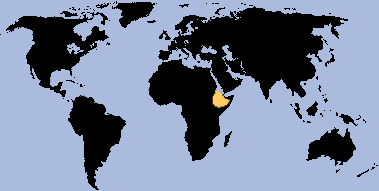
Being the only African country that was not colonized by Europeans, Ethiopia has her own script and calendar. Amharic, which is the working language, and some other languages are written in another script different from any other script in the world. Not many people speak English, even to access some spiritual materials written in English. We have to rely on translations even to listen to sermons on tapes, watch some audio-visual materials and to read DPI books. Getting internet access is a bit expensive and many people are not used to going to internet cafés to visit websites and get resources. Some don’t know how to use it. But at least it is better now-a-days than some years back.
We also have our own calendar. We celebrated our “Ethiopian Millennium” on September 12, 2007 which was our new year “Meskerem (September) One” 2000.
We mainly use the Amharic version of the Bible. It was translated into Amharic not from the original texts but from Ge’ez, an ancient Ethiopian language. It also had the influence of Arabic and Coptic languages esp. in the 13th and 14th centuries. Compared to English Bibles of today like the NIV, the Amharic translation has so many problems. There is one other better translation into Amharic done by the International Bible Society, but it is less accepted by the majority here.
Moreover, reading especially the Bible is not common here. Too many people keep their Bibles under their pillows instead of reading and repenting in accordance with the will of God. Perhaps, this is due to the type of value that the Orthodox Church imposed on people. I even heard that in the olden days, people were taught not to read their Bibles or all the curses written in the Bible would be on them if they did so because they were “unworthy”. Many people still hold onto to this view and fear to examine the Scriptures because they think that they are unworthy. Some even say that it is putting God to the test. People are used to leading their “Christian life” without the Bible. Even in the church, getting people into their Bibles is a hard job.
There has been a lot of progress in the country, especially in the area of development. But the level of poverty is still deep. We are working on registering HOPE worldwide in Ethiopia to help the poor, especially the orphaned and vulnerable children.
We are grateful to God about the Nairobi Christian Church, especially the leaders who have not given up on us and instead are helping us and praying for us in and out of season. We appreciate any encouragement, assistances, prayers and visits of all disciples around the world.